Yes! Let’s!
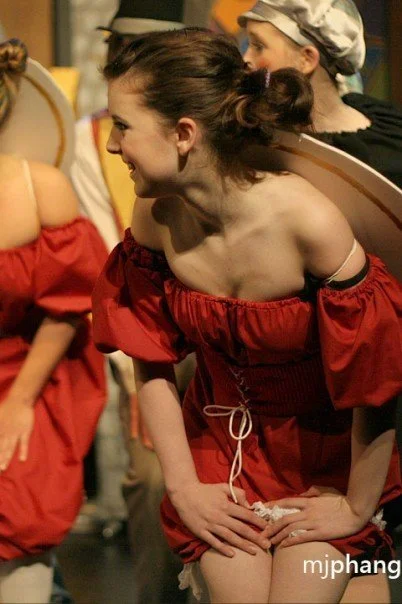
Grade 9 Simone playing a plate in Beauty and the Beast
It’s completely unsurprising that in high-school I was super into theatre and choir. While I struggled to focus in other subjects like math, my music and theatre grades would always reflect my passion for the respective art forms. When I realised that opera was a mixture of acting and singing (in my preferred style), I was all in! I went to continue my studies, which has led me down this crazy, crazy path.
I had two acting teachers in high-school: Grade 9 with Mr. Seconda (the eccentric, free-spirited teacher) and grades 10-12 with Mr. Novotney (the somehow-has-always-looked-32-years-old-for-the-past-20-years teacher). Both teachers gave me a great foundation of skills, which I continue to use in my day-to-day life as an opera singer. Theatre games, were my favourite! They can be unpopular/uncommon in the operatic world, but I think they are of great value!
There’s one theatre game in particular that think about almost daily. I’d love to share how it follows me into the rehearsal room.
The game is “Yes! Let’s!”
Here’s the rules:
One person will tell the group an action or series of actions. The whole group will enthusiastically shout, “Yes! Let’s!” and do the action.
Here’s how it would play out:
Leader: “Let’s roll on the ground, jump up, and clap three times!”
Group: “Yes! Let’s!” (The group rolls on the ground, jumps up and claps three times)
That’s it! That’s the game! Easiest instructions ever!
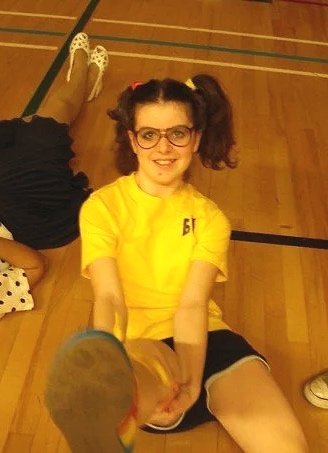
Grade 9 Simone backstage during a show of Footloose
Mr. Novotney introduced our acting class to this game when I was in grade 10. We would play it for about 3-5 minutes as a warm up before many of our acting classes. We’d cry like babies, imitate elephants, stick our tongues out while hopping on one foot, then move onto our scenes, monologues and Meisner technique sessions… Whatever “meat” we were working on that semester.
Okay… Simple game! So why on earth does would it have such an impact on my approach to rehearsals now?
When I was in grade 12 (3 years of playing “Yes! Let’s!”), Mr. Novotney revealed the real meaning behind the game. “It’s a ridiculous game.” He said, “but the reason I have students play this game is so that everyone is encouraged to get out of their comfort-zone without putting much thought behind it. It gives an opportunity to try new things, and forces you to be enthusiastic by saying ‘Yes! Let’s!’ even if the initial instinct is to say ‘no.’”
Honestly, it checks out!
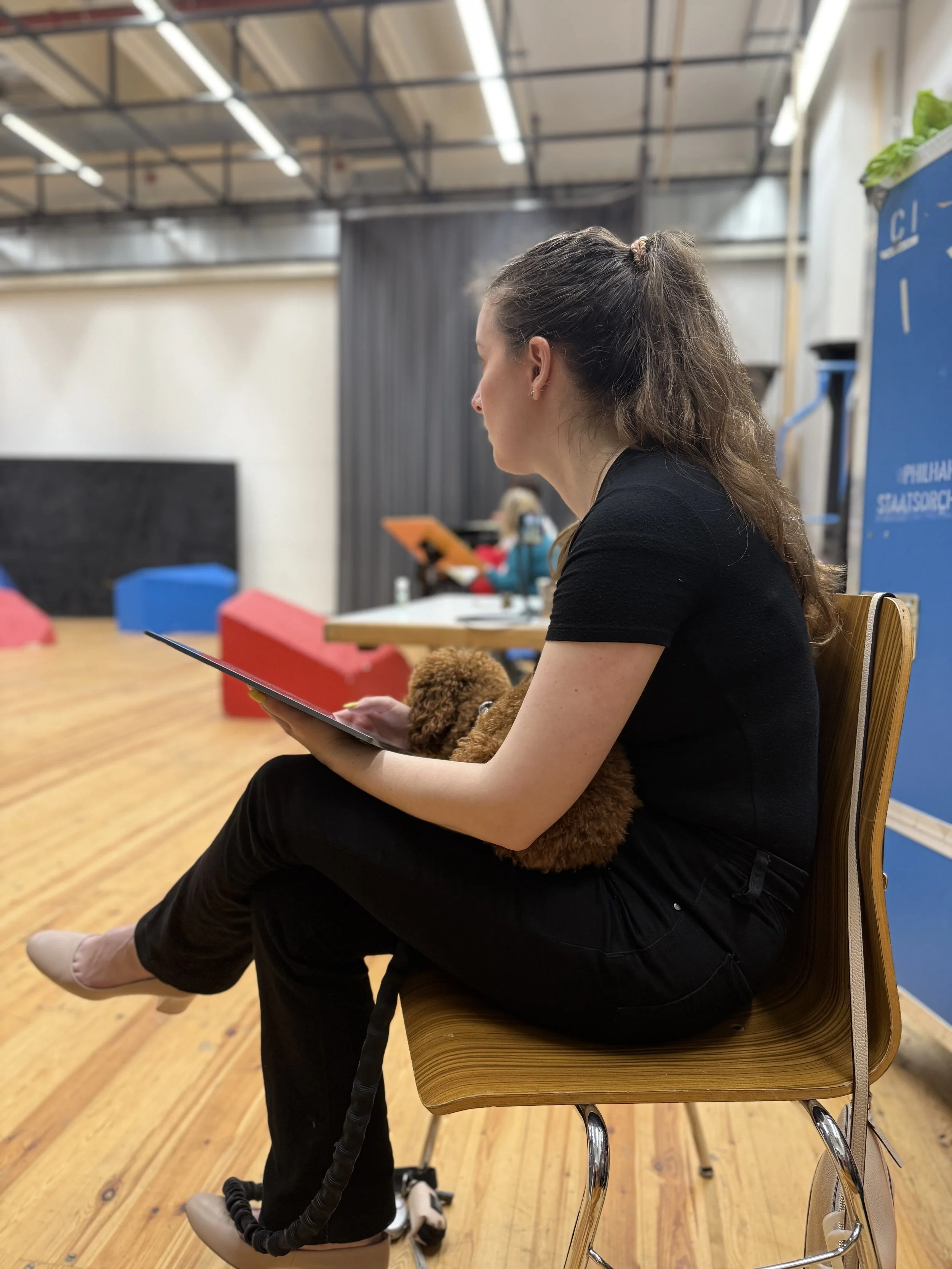
Rehearsing for Cosí fan tutte at Hamburg State Opera
I’ve been in opera now for 16 years through various points in my development: as a student, young artist and now as a professional freelancer. The rehearsal room is a constant in my day-to-day life, but the the way rehearsals are shaped/constructed are always different. I work with directors who block pre-meditated staging, directors who don’t know the translation, directors who discover staging on the spot, directors who change everything the day before the dress rehearsal, directors who yell, directors who want you to sing upstage, etc. What is being asked of me is different every time, and will always be different. My goal is to always find a place that feels honest to me and my character, while also working towards the vision of the director.
This is where the game comes into play: While working with the variety of directors and receiving ideas/notes/feedback, there is almost always a little voice in my head that says “Let’s try it!” And we see if it works! That little voice greatly helps me try new perspectives of my character and interpret the director’s ideas without personal judgement.
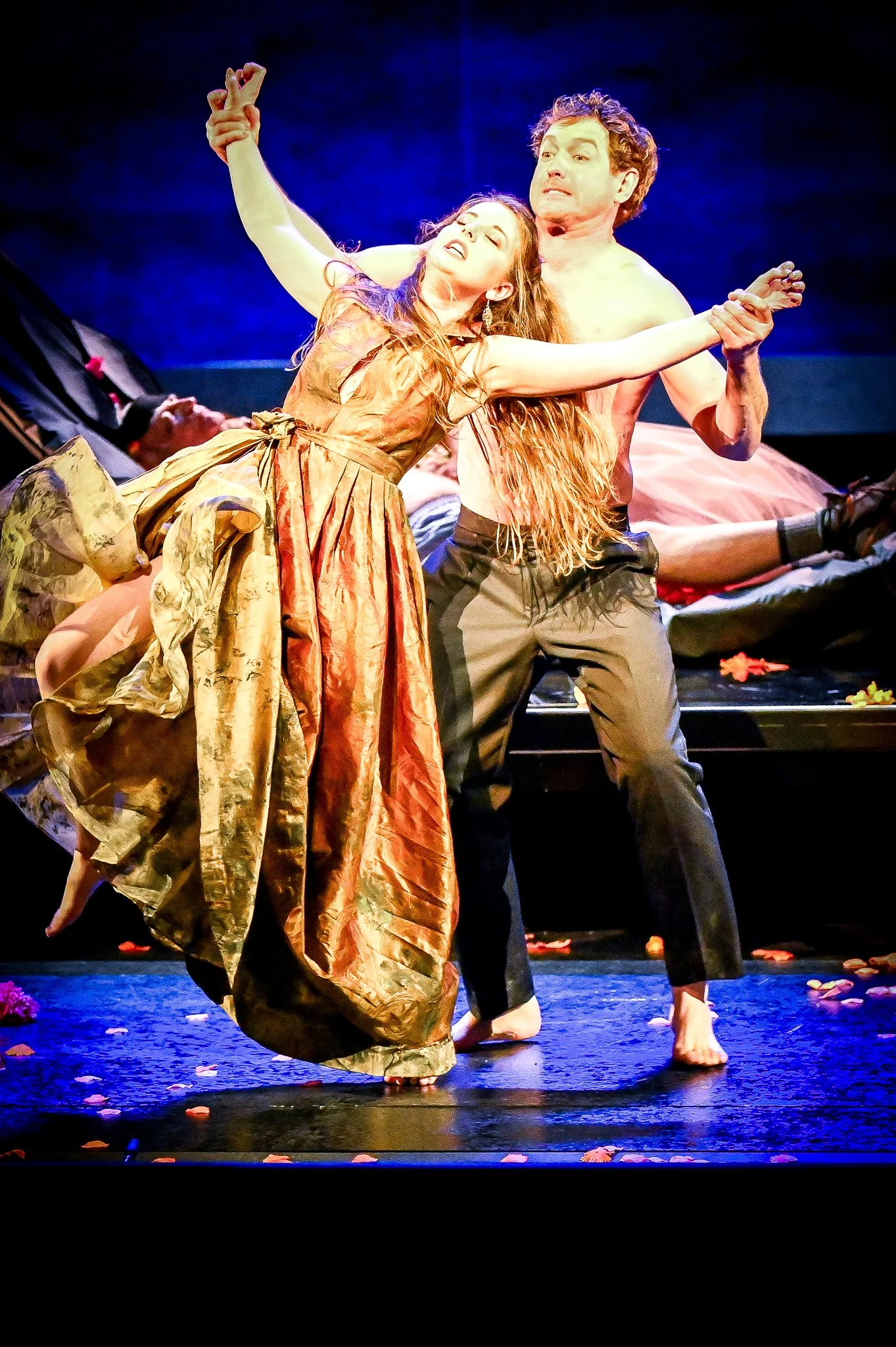
Performing Hermia in Deborah Warner’s A Midsummer Night’s Dream with Sam Furness
Another great aspect of “Yes! Let’s!” is it allows me to stay unbothered when challenging things are asked of me within a rehearsal process.
The most recent example is the Deborah Warner production of A Midsummer Night’s Dream we created in Madrid, in which I played Hermia. Deborah’s rehearsal technique focuses deeply on the interpersonal relationships, and relies heavily on the most intricate details of a scene. What that meant is we repeated scenes... A LOT. We spent hours and hours and hours on 2-minute scenes. We would do it, then do it again, then do it again and every time something would change, but often for the better. Admittedly, every single time Deborah said, “Let’s go back,” there would be that little voice in my head that replied “Yes! Let’s!” and I’d keep a good attitude about the repetition. All of my scene partners had similar attitudes, which allowed for a great energy in rehearsals.
I’ve certainly become frustrated in rehearsals. I’ve also witnessed many colleagues become frustrated by challenging rehearsals. Things can get tense. We’re human and not immune. That being said, when everyone in the room has a positive attitude, it makes for a better experience overall and a better show in general.
With Deborah Warner’s Midsummer, I felt the detail was completely worth it and satisfying! Overwhelmingly, the reviews remarked on the good acting from the full cast and readable relationships between the characters. For an industry that get’s a reputation for bad acting, I was very proud of our team!
An ideal rehearsal room is one that feels safe to share ideas from both sides of the stage. To agree, disagree, change your mind, ask “why?” and truly collaborate! When a performer shuts down a director’s ideas, it removes the possibility to collaborate healthily and accept feedback. Likewise, when a director’s shuts down a performer, the ability to express freely becomes challenging and the room becomes an unsafe place to share ideas. Personally, when I feel unsafe in a rehearsal process, I put an emotional barrier between myself and the situation. I give fewer offers. I still strive towards good work and the director’s vision, but there is now a guard up where there wasn’t before. A great director is one that will nourish and not tear down. This is where I do my best work.
Don’t get me wrong, I have boundaries and think they’re healthy to have. To be clear on what a boundary is, though:
Real boundaries: “I don’t like being touched on my lower hip.” “I have a problem with my elbow and can’t climb the ladder.” “Speak to me respectfully.”
Not real boundaries: “I’ve always performed Rodolfo this way.” “We’ve already rehearsed this blocking, I’m not changing it.” “I can’t sing while walking across the stage.”
The rehearsal room is such a great place to challenge yourself. Maybe you CAN sing being suspended upside down? Maybe you CAN overcome your fear of heights? Maybe you CAN sing in a 40lb costume? Maybe you CAN sing a Handel aria while running on a treadmill? Try it! Work on your fears! Work on your cardio+singing! Use the set as a playground! Let the room be a place to grow, discover and push your limits!
For me, the best way to show up for rehearsal is with a resounding “Yes! Let’s!”